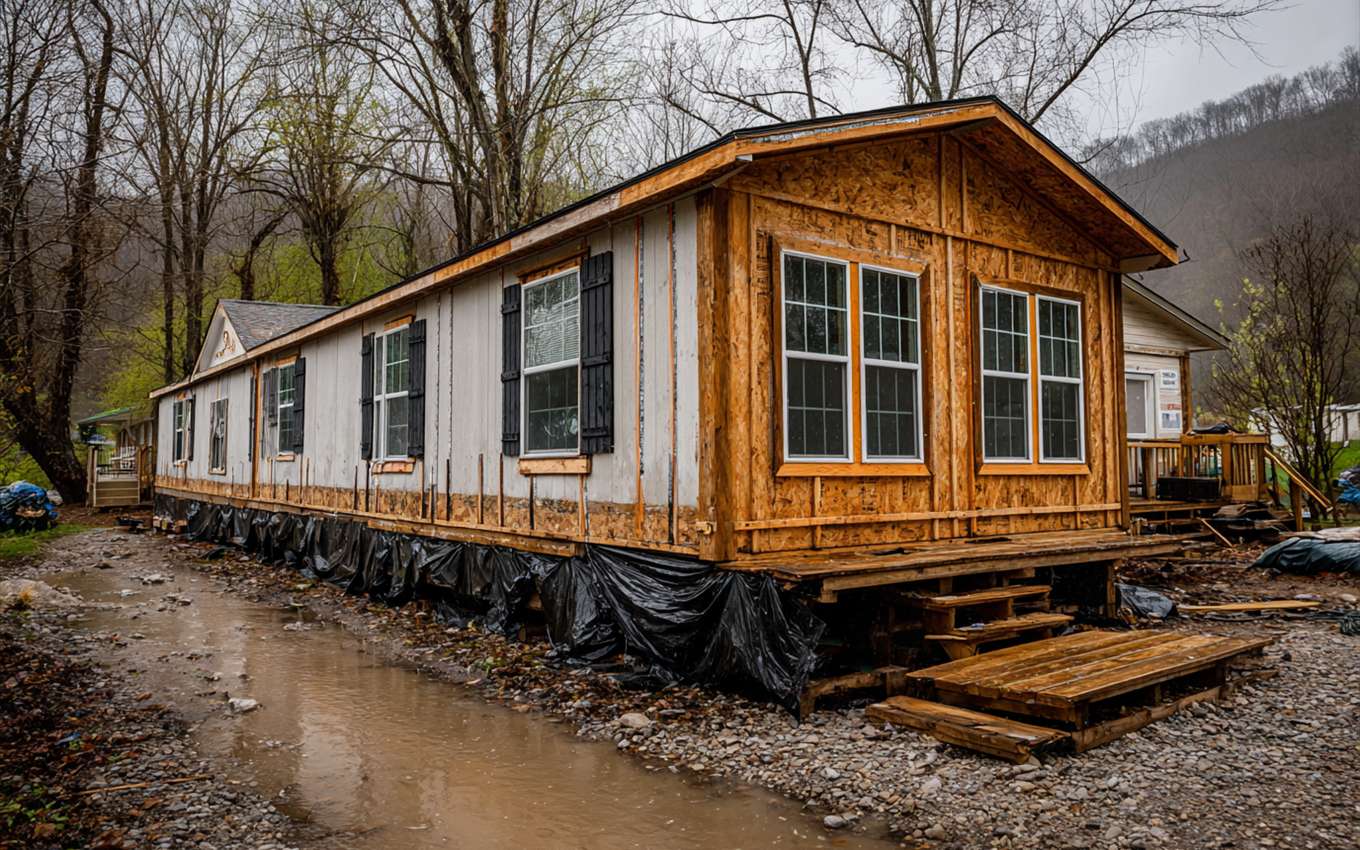
Water Damage in a Manufactured Home
A manufactured home is built differently from a site-built house, and water behaves differently inside one. The floor is a deck of particleboard or OSB over floor joists. Between the joists is insulation. Under all of it is the belly wrap, also called the bottom board, a woven or plastic sheet that closes the underside and keeps out animals and weather. Many of the water lines run through that space. When one drips, the water lands on the belly wrap, soaks the insulation and sits there, sometimes for months, until the decking above goes soft. Manufactured homes are common in Graham, Spanaway, Elk Plain and other parts of the area, and most of these calls start with a floor that feels wrong.
Where the Water Comes From
| Source | Where it is | What it usually does |
|---|---|---|
| Supply lines under the home | Running through the belly | Drips onto the belly wrap; water pools in a low spot |
| Water heater closet | Often a small closet off a hall or the outside | A leaking tank or fitting soaks the closet floor and the decking around it |
| Washer | Laundry area | A hose leak wets the floor and runs under the wall |
| Toilet and tub | Bathrooms | A failed seal or drain soaks the decking under the fixture |
| Kitchen sink and dishwasher | Under the counter | A slow drip ruins the cabinet floor and the decking under it |
| A freeze | Lines near the skirting or in an unheated space | A split line runs whenever water is used, often unnoticed |
Drying Under a Home on Piers
Drying a manufactured home often starts underneath. A restoration company opens a section of the skirting and inspects the belly wrap for sags, which mark where water has pooled. It opens the wrap to drain the water and pull wet insulation. Then it dries the underside of the decking and the joists with air movers aimed into the belly, while dehumidifiers work inside the home. The belly wrap is patched or replaced, new insulation goes in, and the skirting goes back. Inside, wet carpet and pad come up, and the decking gets checked with a meter.
Soft Floors and Decking Replacement
Particleboard decking, common in older manufactured homes, loses strength when it gets wet and doesn't recover. A soft spot that gave way once will keep giving. OSB holds up somewhat better but still swells at the edges. When a section of decking has gone soft, the usual fix is to cut it out between joists and replace it, then put the flooring back. The company maps how far the soft area runs with a meter and by feel, because the visible ripple is usually smaller than the damage.
Before the Company Arrives
- Shut off the water at the home's main valve, or at the meter if you can't find the main.
- Turn off the water heater's power or gas if it's the source.
- Stay off a floor that gives. Decking that's gone soft can break through.
- Don't cut into the belly wrap yourself; it can release a lot of water at once, and it's easy to damage wiring and ducts in the belly.
- Photograph the floor, the source and the skirting.
More detail on how these homes are built underneath: manufactured homes, belly wrap and water.
Permits and Inspections
In Washington, L&I handles permits and inspections for alterations to manufactured homes. Water damage repairs that stay with like-for-like materials often don't need one, but structural or electrical changes can. A restoration company or the installer of any new fixture can tell you which applies.
Washington L&I: manufactured home permits and inspections
Inside the Home While It Dries
While the underside is opened and dried, the inside needs attention too. Carpet and pad over wet decking usually come up. Vinyl flooring may have to be lifted where the decking is soft. Cabinets in the kitchen and bathroom often sit on the decking, so a leak under a sink can swell the cabinet floor and the decking at the same time. Walls in many manufactured homes are thin paneling or vinyl-covered gypsum, and they wick water at the bottom edge. Dehumidifiers inside the home, with windows and doors closed, pull the moisture coming up from below.
Winter Under the Skirting
The space under a manufactured home is only as warm as the skirting and the belly wrap make it. Torn wrap, a missing skirting panel or a vent left open lets cold air reach the water lines, and lines near the outside edge freeze first. Heat tape on exposed lines, intact skirting and a quick look underneath before winter go a long way. After a cold snap, look under the home for a sagging, wet belly wrap before the floor tells you.
Before You Move Anything Heavy
A soft section of decking can give way under a heavy appliance or a loaded bookcase. If the floor is soft near the washer, the fridge or the water heater, leave those where they are until someone has looked underneath. Moving them can break through the decking and turn a repair into a bigger one.
Can Water Under My Home Come From the Ground?
Yes. On wet ground, especially in winter, standing water under the home or a saturated area near the skirting can raise humidity in the belly and dampen insulation. But most soaked belly wrap traces back to a plumbing leak above it. A sag in the wrap with water in it almost always means a line is leaking.
Is My Floor Safe to Walk On?
If it feels soft or bouncy, treat it as unsafe and keep people off it until it's checked. Water-weakened particleboard can break through without warning.
Manufactured Homes Around Puyallup
The valley floor
- Downtown PuyallupValley floor
- North PuyallupValley floor
- Puyallup ValleyValley floor
- FruitlandValley slope
Up the hill
South and southeast
Southwest toward Spanaway
West toward Fife
Shops and outbuildings on acreage: shops, barns and detached garages.