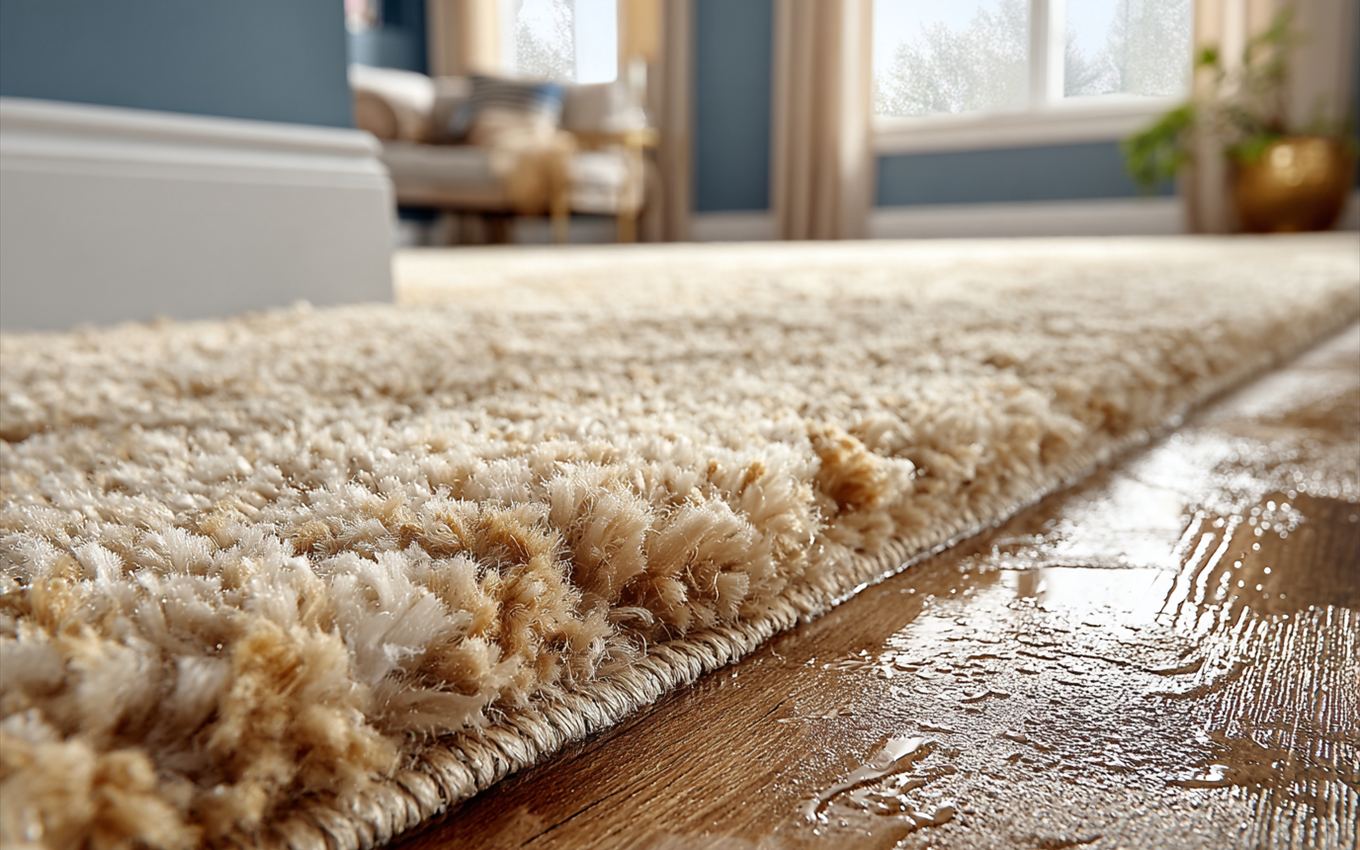
Water Removal From Carpet, Step by Step
Water removal from carpet starts with taking water out as liquid, because that's far faster than evaporating it later. An extractor pulls water out of the carpet and the pad under it. Then the carpet is lifted so air can reach the pad and the subfloor, and the decisions get made about what stays. In most Puyallup homes the carpet sits on a pad over plywood or OSB, held at the edges by tack strip. All four layers need attention, and the subfloor is the one people forget.
Carpet, Pad, Tack Strip and Subfloor
- Carpet. The face fibers and the backing. Clean water caught quickly can often be extracted and dried, and the carpet relaid.
- Pad. The foam layer underneath. It holds water like a sponge and costs little, so it's almost always replaced.
- Tack strip. The wood strips with nails around the room's edge. Wet tack strip can swell or rust, and it's often replaced with the pad.
- Subfloor. Plywood or OSB on the joists. OSB swells at the edges when it stays wet. Plywood usually dries. This layer decides whether the floor feels right again.
How the Water Comes Out
- Stop the source at the main shutoff or the fixture's valve.
- Clear the floor. Furniture up on blocks or out of the room, with foil or plastic under wooden legs so stain doesn't bleed into wet carpet.
- Extract. A weighted or wand extractor pulls water out of the carpet and through to the pad.
- Lift the carpet back from the wall and pull the wet pad.
- Check the subfloor with a meter, and look below if there's a crawlspace.
- Dry. Air movers under and across the carpet, dehumidifiers running, the room closed.
- Decide. Relay the carpet on new pad, or replace it, based on the water and how long it sat.
Kept or Replaced
| Item | Clean water caught early | Water that sat for days, or came from outside |
|---|---|---|
| Carpet | Often extracted, dried and relaid | Usually replaced |
| Pad | Usually replaced | Replaced |
| Tack strip | Sometimes kept | Usually replaced |
| Area rugs | Often cleaned and dried off-site | Depends on the rug |
| Subfloor | Dried in place | Dried, cleaned, sometimes replaced if swollen |
| Upholstered furniture | Often dried if lifted quickly | Harder to save |
More on these decisions: wet carpet and pad, what can be saved.
Basements, Garages and Laundry Rooms
Few homes on South Hill have basements, but many have garages with a water heater, a washer or a second fridge, and some older valley homes have daylight lower floors. Water in those spaces usually lands on concrete. The slab shrugs it off. The cardboard boxes, carpet scraps, garage drywall and the threshold into the house don't. Push the water toward the garage door, get stored things up off the floor, and have the shared wall checked from both sides. Water wicks up the drywall on the house side without showing for a day or two.
Why Speed Matters on Carpet
Carpet and pad stay wet long after the surface feels dry, and wet pad starts to smell within a day or two. The smell comes from bacteria growing in the damp foam. It's also why carpet wet with clean water and handled quickly is often saved, while the same carpet left wet for several days usually isn't. If the source is stopped and the room is safe, call and say how long the water has been there.
Hard Floors in the Same Room
Many homes mix carpet with other flooring, with laminate or vinyl plank in the kitchen and carpet in the living room, and water runs under the transition. Laminate's fiberboard core swells at the seams and rarely flattens again. Vinyl plank resists water on its surface, but water gets underneath through the seams and sits on the subfloor. Hardwood cups as its boards take on water from below. Tile is fine on top, but grout and underlayment can hold water. When the company maps the wet area, it should take readings past every transition, because the water doesn't stop where the carpet does.
Stairs and Landings
In two-story homes, carpeted stairs and landings sit directly under or next to bathrooms and laundry rooms. Water from upstairs can run down the stair stringers and soak the pad on each tread. Stairs are slow to dry and awkward to work on, so expect the company to pull the carpet on the affected treads and dry each one.
Before the Extractor Arrives
Pick up small rugs, shoes, boxes and anything with cardboard or paper on the wet floor. Lift floor-length curtains off the carpet. Move fragile or valuable things out of the room. Those few minutes let the company start extracting as soon as it walks in.
Pet Accidents Versus a Leak
A carpet that smells after it gets wet isn't always a leak. But a leak can also stir up old pet stains in the pad, which then smell much stronger. If the wet carpet has a history, mention it. It can change whether the pad, and sometimes the carpet, is worth keeping.
Can a Rented Carpet Cleaner Do the Job?
It can pull up some water from a small, clean spill. It can't reach the pad and subfloor the way a truck-mounted or weighted extractor can, and it doesn't dry anything. Most of the water in a soaked carpet is in the pad, and that's what causes trouble later.
Will My Carpet Look the Same After It's Dried?
Often, if it was clean water and it was handled quickly. Sometimes the seams need re-stretching, and some carpet shrinks or loses its backing glue after a long soak. The company will tell you what it sees once the carpet is lifted.
Water Removal Around Puyallup
The valley floor
- Downtown PuyallupValley floor
- North PuyallupValley floor
- Puyallup ValleyValley floor
- FruitlandValley slope
Up the hill
South and southeast
Southwest toward Spanaway
West toward Fife
After the water is out: restoration and mitigation.