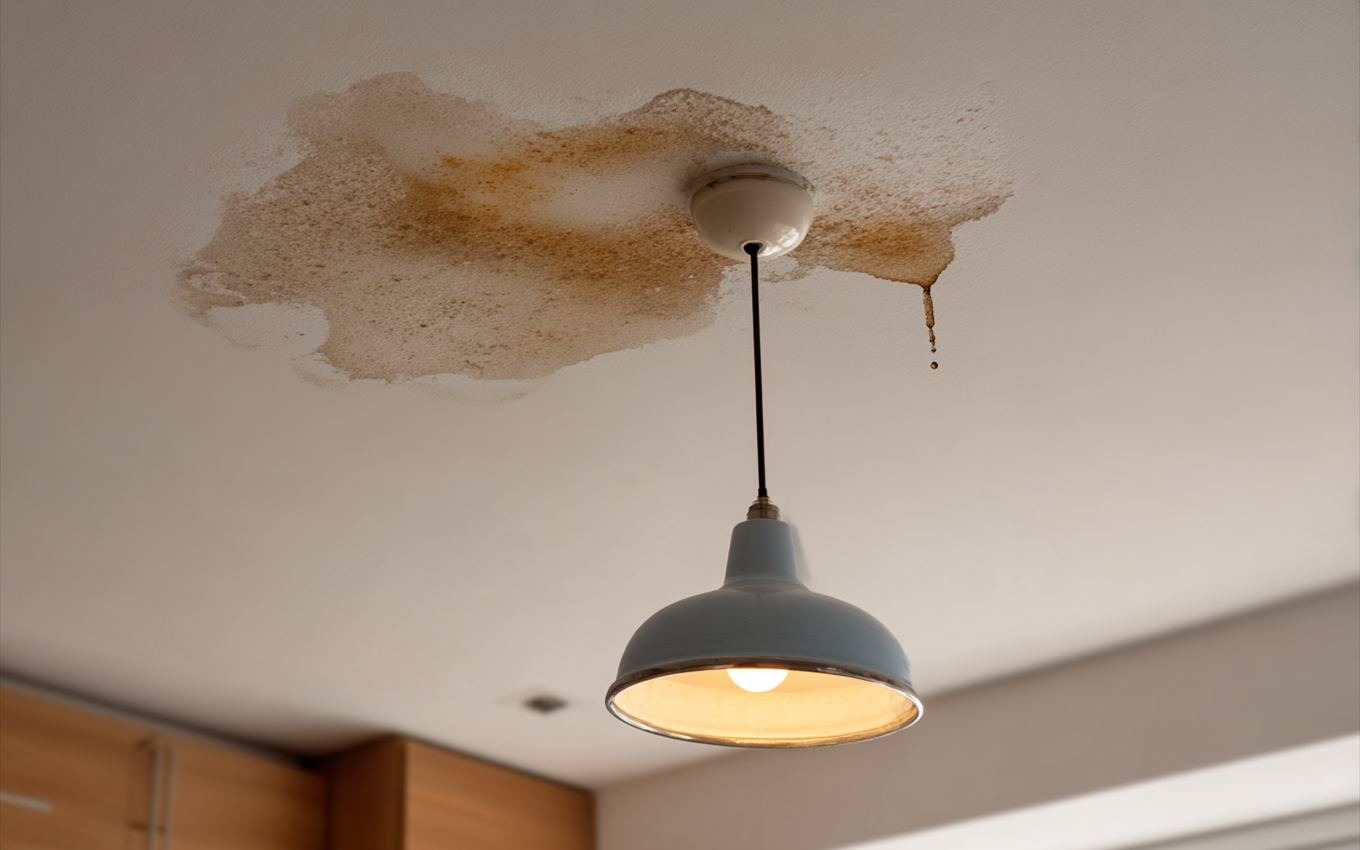
Water Leak in the Ceiling Below a Bathroom
When water shows up in the ceiling below a bathroom, it has already gone through the bathroom floor, the subfloor and the space between the joists. A bathroom has five usual sources: the toilet, the supply lines, the tub, the shower and the sink. Each fails in its own way, and each leaves a slightly different trail in the ceiling below. South Hill's two-story homes and townhomes often put a bathroom right over a kitchen or living room, so these calls are common there. The ceiling is the part you see. The subfloor under the bathroom is the part that decides how big the job is.
Fixture by Fixture
| Fixture | How it usually fails | Where it tends to show below |
|---|---|---|
| Toilet | The wax ring under the base stops sealing, so a little water escapes with every flush | Directly under the toilet; a round stain that grows slowly |
| Toilet supply | The braided line or the shutoff valve drips all day | Under the toilet, toward the wall; stain grows whether or not anyone's home |
| Tub | Caulk or grout along the edge fails; the drain gasket under the tub leaks | Under the tub, often near the drain end |
| Shower | The pan or membrane under the tile leaks only while the shower runs | Under the shower; grows after showers, stops between them |
| Sink | The drain trap or supply lines under the vanity drip | Under the vanity; sometimes runs along a joist before showing |
These are patterns, and a moisture meter is how they get confirmed. More: what causes a ceiling leak below a bathroom.
If Water Is Dripping Now
- Stop using the bathroom above, and shut off the toilet's valve or the main if you can't tell which fixture it is.
- Turn off the breaker for the light or fan in the wet ceiling.
- Put a bucket under the drip and move furniture and electronics away.
- Stay out from under a bulge. A ceiling that sags is holding water and can come down.
- Photograph the ceiling and the bathroom above, including the base of the toilet and the tub edge.
Opening and Drying the Ceiling Bay
The space between the ceiling below and the bathroom floor above is a closed box. Water that gets in has nowhere to go. A restoration company maps the wet area from below with a meter, then usually removes the wet section of ceiling in a clean rectangle. That lets it pull wet insulation, check the joists and the underside of the subfloor, and get air into the bay. Air movers and a dehumidifier dry the space. The bathroom floor above often needs its own drying, and sometimes the flooring around the toilet or tub has to come up. When everything reads dry, new drywall goes up, gets textured to match, and the ceiling is painted.
What's Restoration and What's a Separate Repair
The restoration company handles the water damage: the ceiling, the insulation, the joists, the subfloor, the drying and the rebuild. Replacing the toilet's wax ring, a failed supply line or a shower pan is fixture work, and that's a separate repair. Some restoration companies take on parts of it. Ask, so you know which pieces are covered.
Old Stains and New Ones
Not every ring means an active leak. A stain from a leak that was fixed years ago can stay put for good. Signs that water is still coming are a stain that's growing or darkening, drywall that feels soft, paint that's bubbling, a new ring inside an old one, or a damp smell. If you're not sure, a meter answers it in seconds.
The Same Problem Under a Laundry Room
Upstairs laundry rooms leak into ceilings the same way bathrooms do, but usually faster. A washer hose that bursts can put several gallons a minute onto the floor until someone shuts the valve. If nobody's home, that water finds its way through the subfloor and into the ceiling and walls below within minutes. The signs below are the same: a stain, a drip at a light fixture, sagging drywall. But the volume is often much larger. Braided hoses, a drain pan under the washer with its own drain, and shutting the supply valves when you're away for more than a day all help.
What Happens Inside the Ceiling Bay
Between floors there's usually insulation for sound, and in some homes ductwork, wiring and recessed lights. Wet insulation sags and holds water against the drywall and joists. Recessed light cans and fan boxes give the water a way out, which is why the first drip often comes from a light fixture. Ducts running through a wet bay can carry damp air into other rooms. The company will usually pull wet insulation, check any ducts and fixtures in the bay, and dry the space before anything is replaced. Turn off the power to fixtures in a wet ceiling until it has been checked.
Before the New Drywall Goes Up
Ask for the readings in the joist bay and the bathroom subfloor before the ceiling is closed. If the subfloor around the toilet still reads wet, the repair isn't ready, however good the ceiling below looks.
Why Is the Stain Several Feet From the Toilet?
Water follows the framing. It rides a joist or a pipe until it finds a dip or a drywall seam, then drops. Several feet of travel is ordinary, so the meter tells you more than the mark does.
Will Primer and Paint Cover It?
Stain-blocking primer works on a stain that's dry and finished. If the seal or line is still leaking, paint just covers a wet subfloor and soggy insulation. Drywall that's gone soft or sags gets cut out instead.
Ceiling Leaks Around Puyallup
The valley floor
- Downtown PuyallupValley floor
- North PuyallupValley floor
- Puyallup ValleyValley floor
- FruitlandValley slope
Up the hill
South and southeast
Southwest toward Spanaway
West toward Fife
If the water came through a shared ceiling: apartments, condos and townhomes.