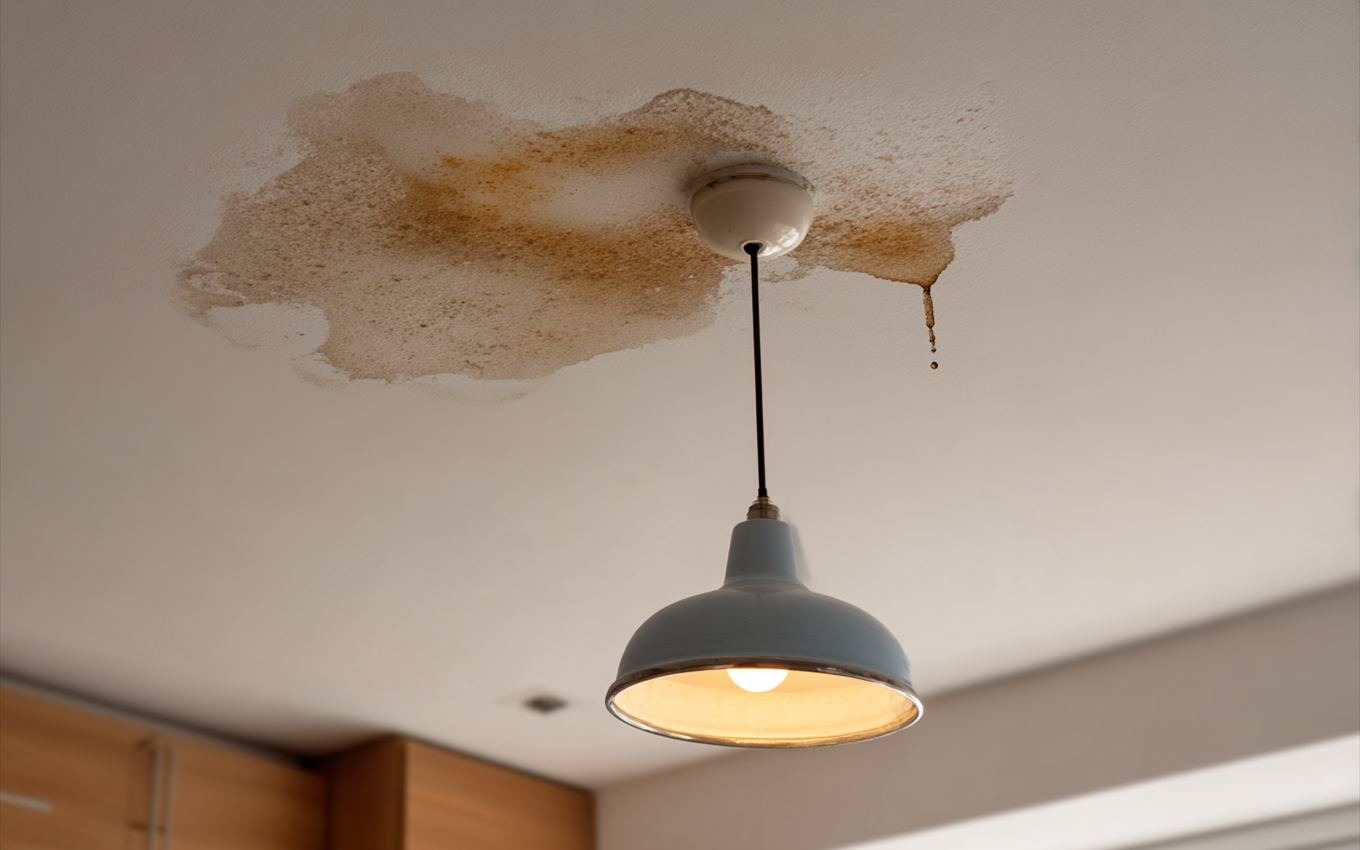
In a two-story house, the room under a bathroom is where a bathroom leak becomes visible. A ring shows up on the kitchen ceiling, or a drip forms at a light fixture, or a patch of drywall starts to sag. By then the water has gone through the bathroom's flooring, the subfloor, and the joist bay between floors. Working backward from the ceiling to the fixture is the first job, and knowing how each fixture fails makes that faster.
How Each Fixture Fails
The toilet. A toilet sits on a wax ring (or a foam seal) that connects it to the drain flange in the floor. When the seal stops sealing, a little water escapes with every flush. It's a slow leak, often months long, and it soaks the subfloor right around the toilet. Signs upstairs: a toilet that rocks, discolored flooring at the base, a soft spot when you step close.
The supply line and valve. The flexible line from the wall valve to the tank, and the valve itself, can drip constantly. This leak doesn't depend on anyone using the bathroom, so the stain below grows day and night.
The tub. Caulk where the tub meets the wall or floor cracks and pulls away, and water from showers runs behind it. The drain and overflow have gaskets under the tub that can fail.
The shower. A tiled shower sits on a waterproof pan or membrane. If it fails, water seeps through only while the shower runs. The stain below grows after showers and holds steady between them.
The sink. The drain trap and the supply lines under the vanity drip into the cabinet first, then through the floor.
Matching the Stain to the Source
| What you notice below | Likely source |
|---|---|
| A round stain directly under the toilet | Toilet seal |
| A stain that grows even when nobody uses the bathroom | Supply line or valve |
| Growth after showers only | Shower pan or valve |
| Growth after baths | Tub drain or overflow |
| A stain under the vanity area | Sink trap or supply lines |
| A stain several feet from any fixture | Water running along a joist before it drips |
These are clues. A moisture meter confirms where the wet area actually is.
Why Speed Matters Here
A ceiling between floors is a closed space. Water that gets in has nowhere to go, so it soaks the insulation and the drywall and keeps the joists and subfloor damp. The longer it sits, the more of the ceiling has to come out and the more of the bathroom floor is affected. A toilet seal that's been leaking for a month can mean a new section of subfloor under the toilet as well as a new ceiling below.
What the Repair Looks Like
There are two separate pieces. The fixture repair is a new wax ring, a new supply line, recaulking or a new shower pan. The water damage repair means opening the wet ceiling, pulling wet insulation, drying the joist bay and subfloor, replacing damaged subfloor or flooring, then new drywall, texture and paint below. Keep both in mind when you talk to a company, so you know who's doing what.
Small Habits That Help
- Fix a rocking toilet right away; it's often the first sign of a failing seal.
- Recaulk the tub and shower when the caulk cracks or pulls away.
- Look at the ceiling under each bathroom every so often.
- Know where the toilet's shutoff valve is, and make sure it turns.
When the Bathroom Is Over a Garage
Some homes, especially townhomes and houses with bonus rooms, put a bathroom over the garage. A leak there shows up in the garage ceiling, which people look at less often. It also sits next to cold air, so a supply line on an outside wall over a garage is a common freeze point. Look up at the garage ceiling now and then.
Keeping a Simple Record
When you first notice a stain, take a photo of it with a tape measure beside it, and write the date. Take another photo a few days later from the same spot. A growing stain shows up clearly side by side, and the photos help the company and your insurer.
Questions
Why didn't I see water on the bathroom floor?
Because the leak is under the floor or inside the fixture's connection. A failing toilet seal or a shower pan leaks into the subfloor, not onto the surface.
Is a stain that dried up safe to ignore?
Not until you know why it dried. Some leaks come and go with use. Have it checked with a meter after the bathroom has been used normally for a few days.
Do I need to stop using the bathroom?
Stop using the fixture you suspect until it's checked. That keeps the damage from growing.
Where It Comes Up
Bathroom-over-kitchen layouts are common in Sunrise, Manorwood and Summit. The full service page: ceiling leaks under bathrooms.
EPA WaterSense: finding household leaks
Drying Equipment at Home: Noise, Power and Patience
Noise, power, closed doors and pets while the house dries.

Buying or Selling a House With Past Water Damage
Disclosure, records and what a buyer will want to see.