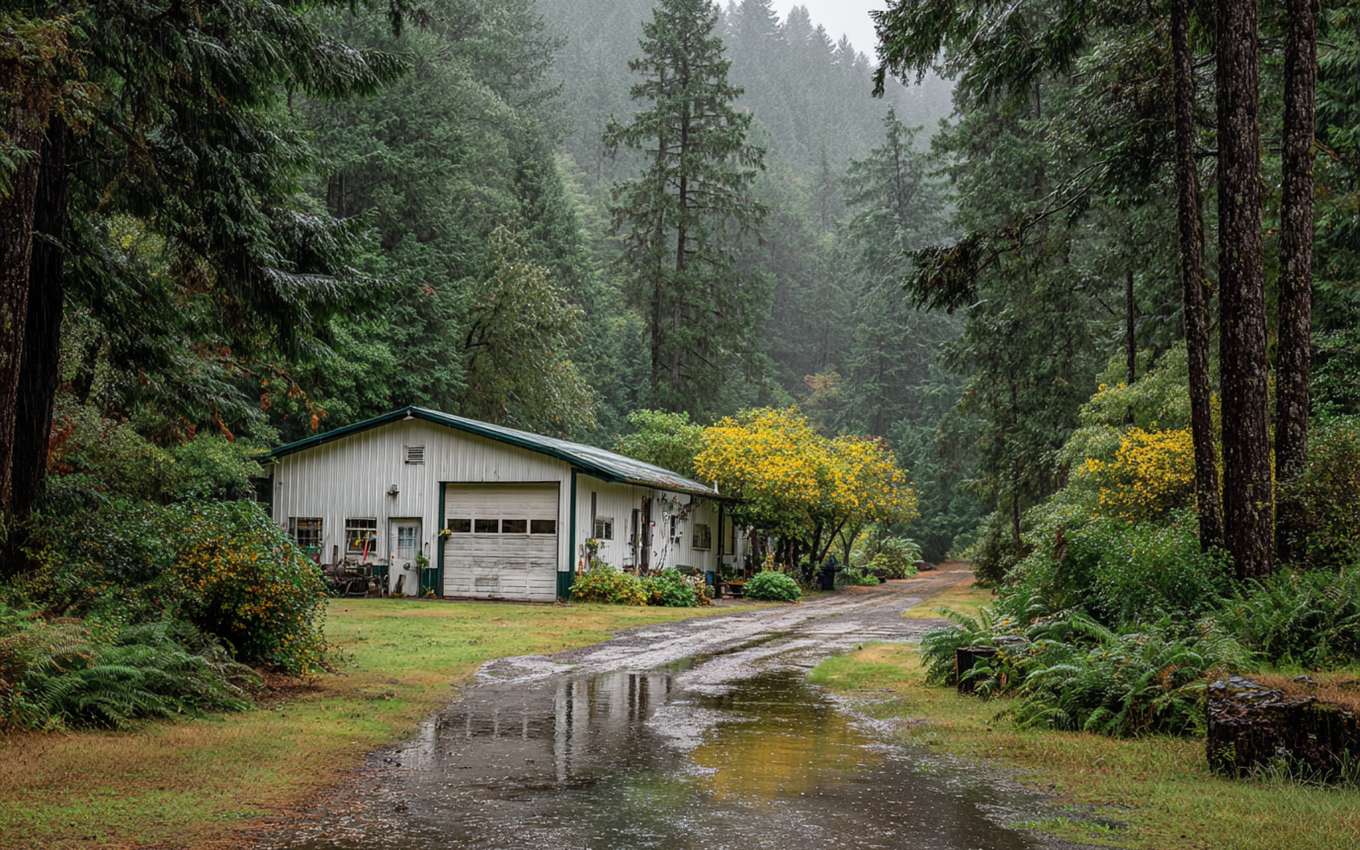
Out past South Hill, in Graham, Frederickson, Waller and the valley farms, a lot of properties have more than one building. There's a shop with a roll-up door, a barn, a detached garage, maybe a converted outbuilding with a bathroom or a utility sink. Those buildings get water damage too. Because nobody walks through them every day, a leak can run much longer before anyone notices.
Where the Water Comes From
| Source | Why it happens |
|---|---|
| Frozen and split supply lines | Outbuildings are often unheated, and lines run through cold walls or come up through the slab |
| Long underground service lines | A break between the house and the shop shows up as a soggy patch, low pressure or a high bill |
| Hose bibs and yard hydrants | A hose left attached, or a hydrant that doesn't drain, freezes and splits |
| Utility sinks and bathrooms | A slow drip in a building nobody uses daily |
| Water heaters | Small tanks in shops and converted buildings |
| Rain getting in | Wind-driven rain past doors, vents and aging siding |
What Gets Damaged
Shops and barns are often simpler buildings, a concrete slab with framed or metal walls, but what's inside matters:
- Stored goods: boxes, tools, equipment, hay and feed, often sitting right on the slab
- Interior finishes: plywood or drywall walls in finished shops and converted buildings
- Insulation in walls and ceilings
- Flooring in finished spaces, like carpet, laminate or vinyl
Shutting It Off
Many outbuildings have their own shutoff valve on the line from the house. Find it before you need it, and label it. If there isn't one, the main shutoff for the property stops everything. On a well, also turn off the pump's power so it stops refilling the system.
Drying a Detached Building
The approach is the same as a house, adjusted for the building:
- Pump out standing water from the slab.
- Get stored goods up and out of the wet area; photograph anything ruined.
- Remove wet insulation and wall finishes where they've wicked water.
- Dry with air movers and dehumidifiers, closing up the building as much as possible. Big doors and vents make this harder, so the company may need to seal openings temporarily.
- Check with a meter until the materials read dry.
Power can be the limiting factor. Some outbuildings don't have enough circuits for drying equipment, so tell the company what the building has.
Before Winter
- Shut off and drain lines to buildings you won't heat.
- Disconnect hoses and check that yard hydrants drain the way they should.
- Insulate exposed lines or use heat tape where needed.
- Get stored goods off the floor on pallets or shelves.
- Check outbuildings after every hard freeze.
Converted Buildings and Accessory Dwellings
More and more properties have a shop or garage converted into living space, an office or a rental unit, with a bathroom, a kitchenette and finished walls. Those spaces are built like small houses, and a leak in one gets treated like any other house: drywall, insulation, flooring and cabinets all need drying, and the subfloor or slab needs checking. If the space is rented, the tenant should report in writing to the owner, and the owner arranges the work. These buildings are often on their own water line from the main house. Label the valve.
Animals and Feed
In barns, water in feed rooms and stalls is more than a building problem. Wet hay and grain spoil, and damp bedding needs replacing. Move feed off the floor, get animals to a dry area, and handle the building drying once they're settled.
Slabs Without a Vapor Barrier
Older shops and barns were often poured without a plastic barrier under the slab. Those slabs pull moisture up from the ground, especially in winter, so a slab can look damp even after a leak is fixed. A meter reading compared with a dry part of the same slab tells the two apart, so you don't chase a leak that was already fixed.
Questions
Does homeowners insurance cover outbuildings?
Many policies include some coverage for other structures on the property, often with their own limits. Business use can change that. Check your policy.
Is a metal shop worth drying, or just mopping?
If the water stayed on the slab and nothing absorbed it, a squeegee and good airflow may be enough. If it soaked into insulation, plywood walls or stored goods, it needs proper drying.
How do I find an underground leak?
Signs include a wet patch between buildings, low pressure, a pump that runs with everything off, or a meter that keeps turning. Finding and repairing the line is separate work.
Around Puyallup
Shops and barns are part of life in Graham, Frederickson, Waller and the Puyallup Valley. For the house itself on acreage, especially a manufactured home, see manufactured home water damage.
Ready.gov cold-weather preparation
South Hill Freezes: Why Pipes Split on the Hill
The few cold nights that split lines in garages, crawlspaces and outside walls.
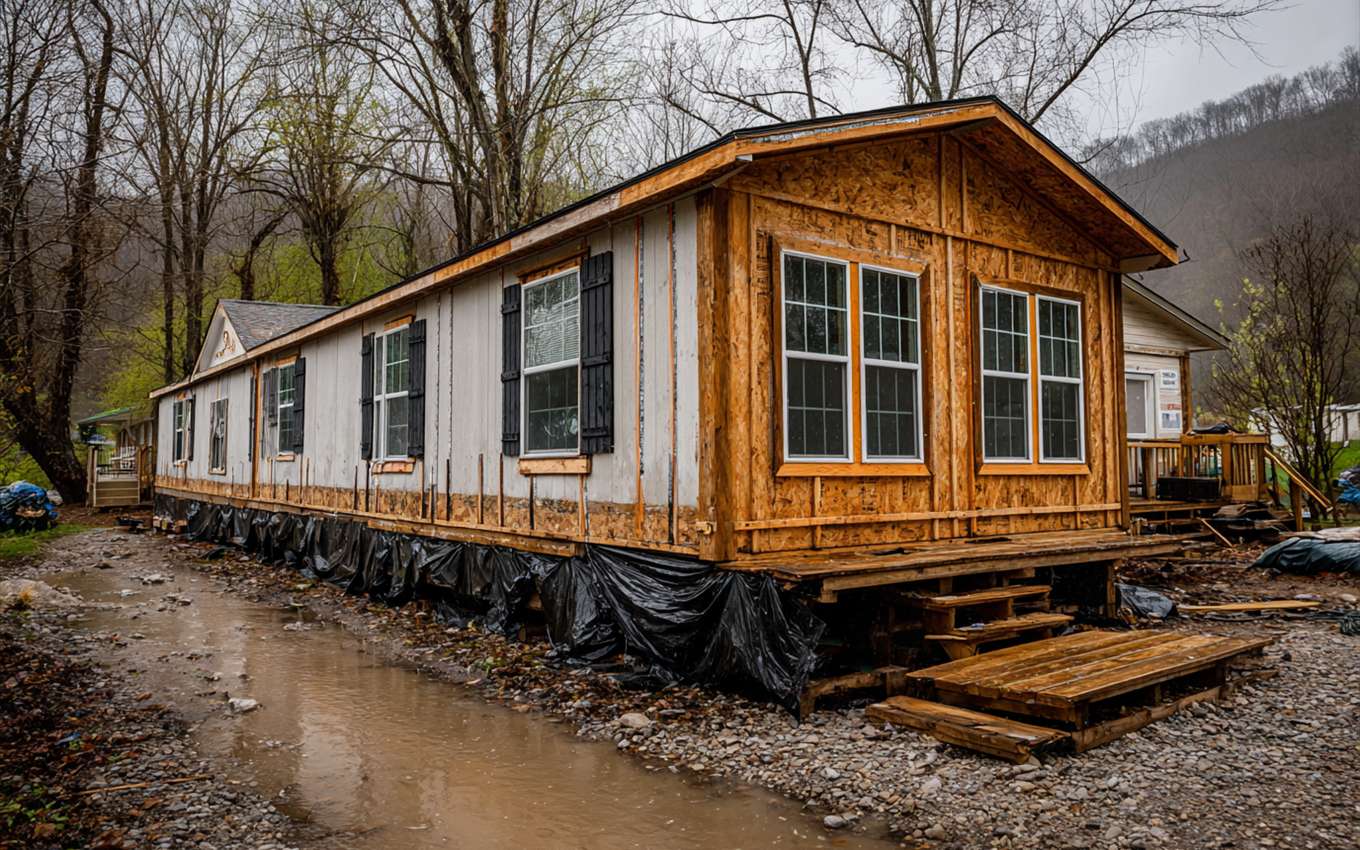
Manufactured Homes: Water Under the Floor and in the Belly Wrap
How these homes are built underneath and how they're dried.