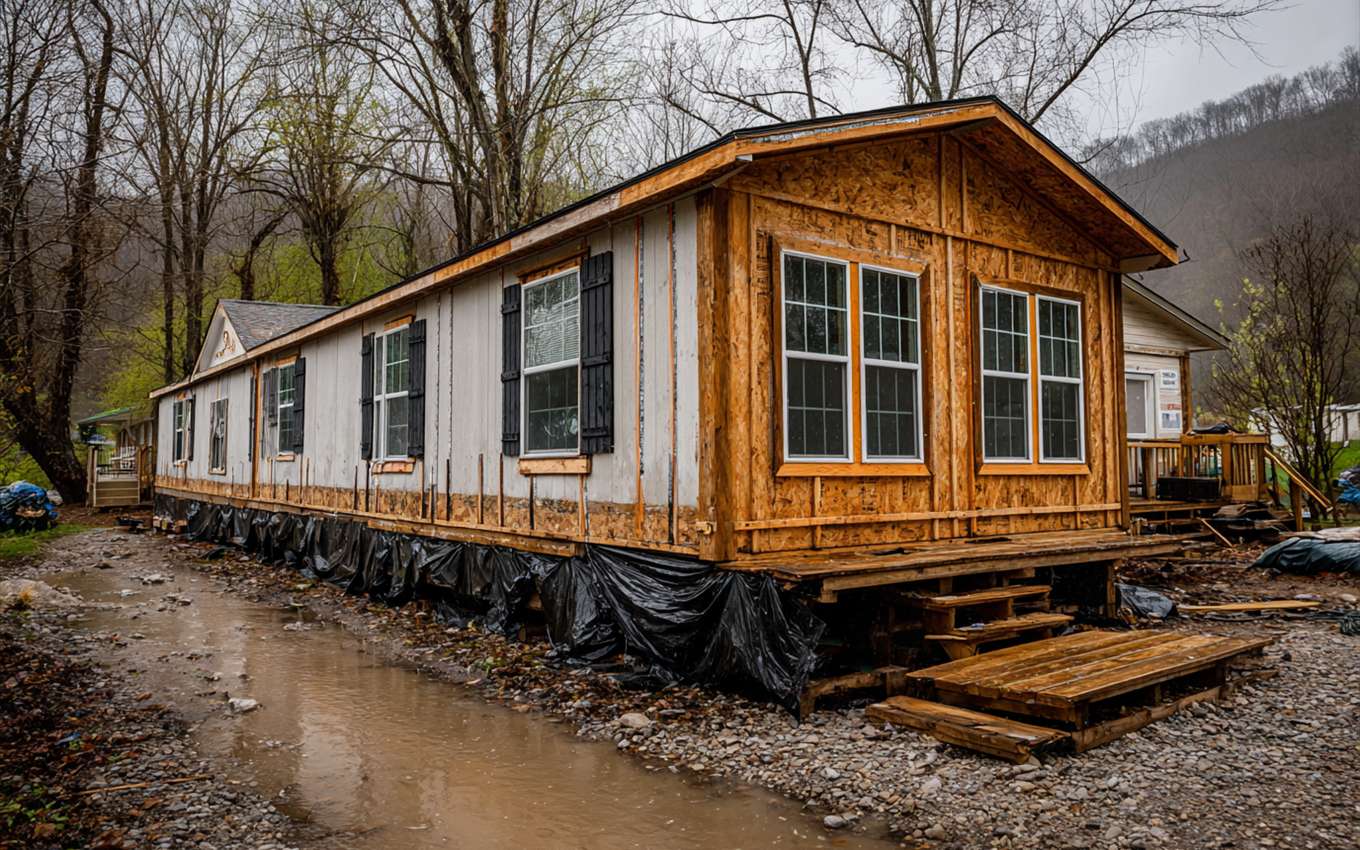
From inside, a manufactured home looks like any other house. Underneath, it's built differently, and that changes how water damage happens and how it gets fixed. Many manufactured homes south of Puyallup, in Graham, Spanaway and Elk Plain, sit on piers with skirting around the bottom. Most of their water problems start in a space few owners ever look at.
What's Under the Floor
From the top down:
- Floor covering: carpet, vinyl or laminate.
- Decking: sheets of particleboard (common in older homes) or OSB, the actual floor.
- Floor joists, running across the home.
- Insulation between the joists.
- Water lines, drain lines, ducts and wiring, often running through the insulated space.
- The belly wrap, also called the bottom board: a woven or plastic sheet stretched across the bottom of the home to close it in.
- The steel frame and piers the home rests on, with skirting around the outside.
Why Water Hides There
When a water line drips inside that space, the water falls onto the belly wrap. The wrap holds it. Over weeks the insulation soaks up the water, the wrap sags with the weight, and the damp air rises into the decking above. Nothing shows inside until the decking softens, the vinyl ripples or a smell appears. By then, the wet area under the floor is often much bigger than the soft spot.
Signs to Watch For
- A soft or bouncy spot in the floor, often near the washer, water heater closet, bathroom or kitchen
- Vinyl that ripples or bubbles
- A sag in the belly wrap visible from under the skirting
- Insulation hanging down or wet when you look under the home
- A water bill that jumps without explanation
- A damp smell inside, especially near the floor
How It Gets Dried
- Stop the water at the main valve.
- Open the skirting to get under the home.
- Find the sag in the belly wrap; that's where water has pooled.
- Open the wrap carefully to drain water and pull wet insulation. This releases water fast and needs care around ducts and wiring.
- Dry the underside of the decking and joists with air movers aimed into the belly, while dehumidifiers run inside.
- Check the decking with a meter; soft sections get cut out between joists and replaced.
- Replace insulation and patch or replace the belly wrap, then close the skirting.
Particleboard vs OSB
Particleboard decking, common in older manufactured homes, loses strength when it's wet and doesn't come back. Once it's soft, it stays soft. OSB holds up somewhat better but still swells at the edges. This is why soft floors in manufactured homes usually mean replacing decking, not just drying it.
Keeping It From Happening
- Check under the skirting once or twice a year with a flashlight.
- Keep skirting vents clear and the skirting intact, so animals don't tear the belly wrap.
- Use heat tape or insulation on lines near the skirting before winter.
- Put a water alarm by the water heater and washer.
Water Heater Closets
Many manufactured homes put the water heater in a small closet, sometimes reached from outside. When a tank or fitting leaks, water soaks the closet floor first, and the decking there is often the first to go soft. Because the closet is small and closed, a slow leak can go on for a long time unseen. Open that closet every few months and look at the floor and the base of the tank.
Ductwork Under the Floor
Many manufactured homes run the main heating duct down the middle of the belly. When water pools nearby, the duct can fill or come apart at the seams. Then the furnace pushes damp air into every room. Ask the company to check the duct while the belly is open.
Skirting and Vents
Skirting vents let air move under the home. When they're blocked by soil, plants or stored items, the space under the floor stays damp longer after any leak. Keep them clear year round, and replace any panel that a dog, a mower or the wind has knocked loose.
Questions
Can I just patch the belly wrap?
Only after the water is drained, the wet insulation is removed and the space is dry. Patching over wet insulation traps the problem.
Does a manufactured home need a permit for repairs?
Like-for-like repairs often don't, but structural or electrical changes can. In Washington, L&I handles manufactured-home alteration permits.
Is a soft floor dangerous?
It can be. Water-weakened particleboard can break through. Keep people off soft spots until they're checked.
Around Puyallup
Manufactured homes are common in Graham, Spanaway, Elk Plain and Midland. The full service page: manufactured home water damage.
Washington L&I: manufactured home permits and inspections
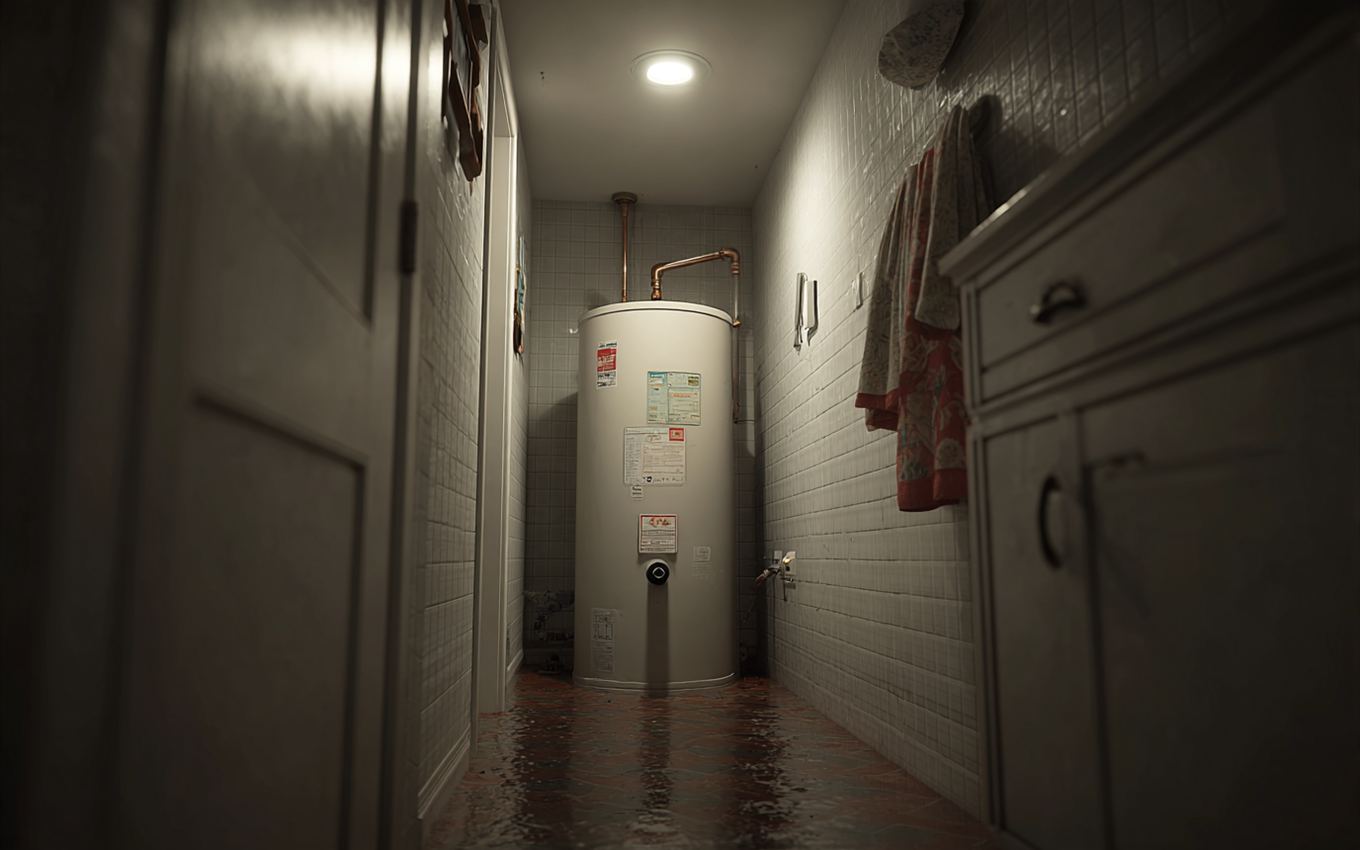
Water Heaters: The Signs Before the Tank Lets Go
Rust, drips and noises worth paying attention to.
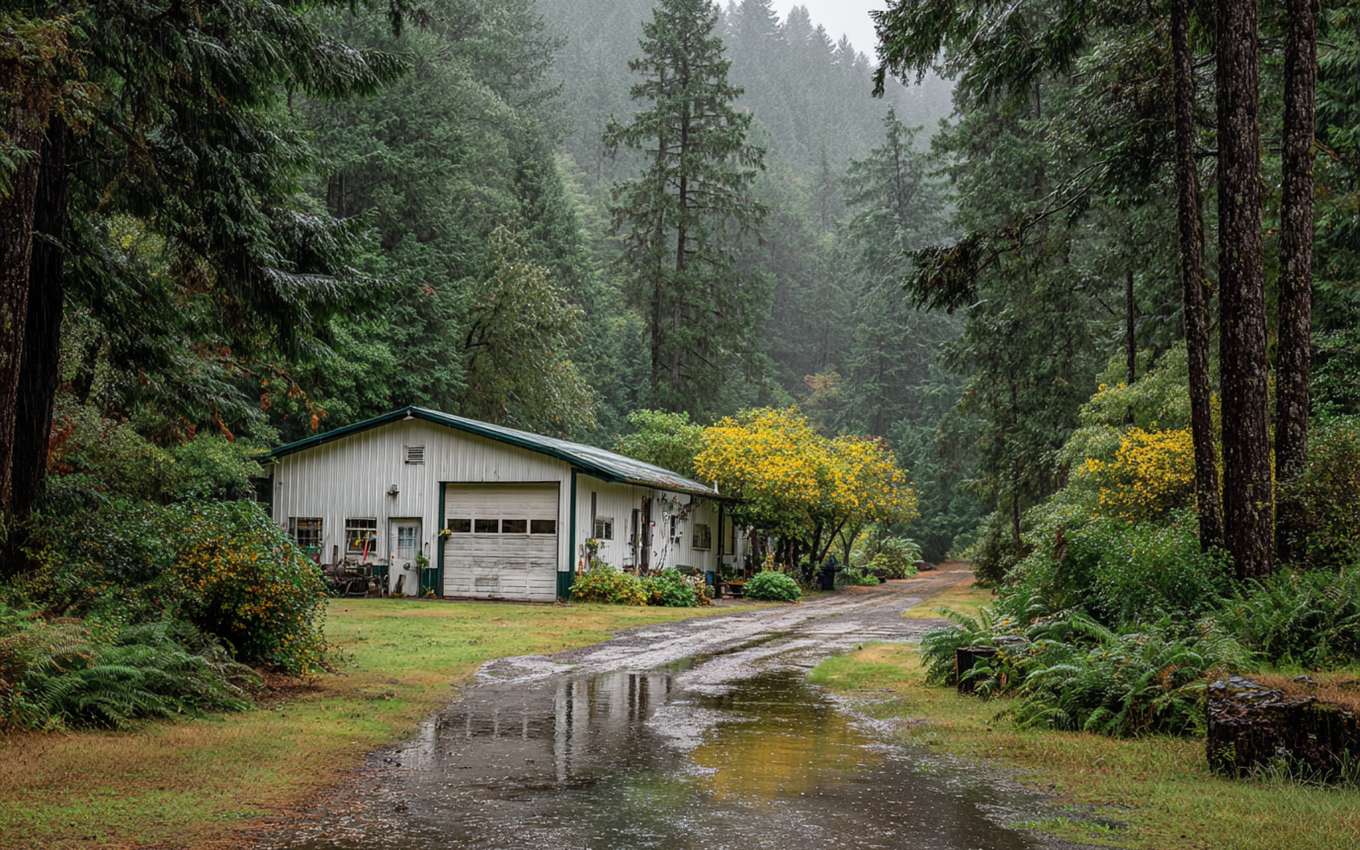
Shops, Barns and Detached Garages on Graham Acreage
Water lines, slabs and drying in buildings away from the house.