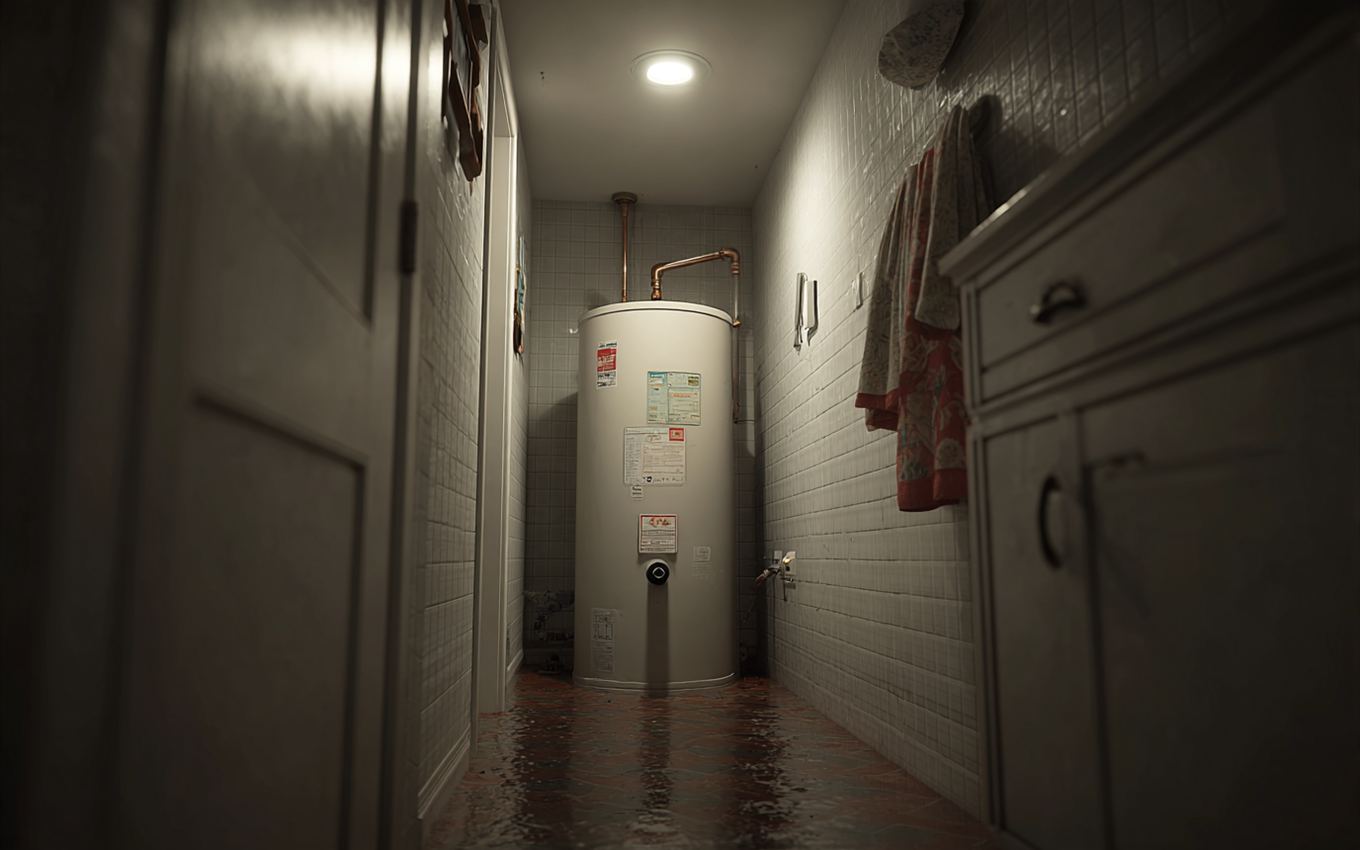
A standard tank water heater holds forty to fifty gallons or more. When it fails, that water goes somewhere: across a garage slab, into a closet floor, under a manufactured home, or through a ceiling if the heater sits upstairs. Tanks rarely fail without warning, though. Most give signs for weeks or months first. Learning to read them is one of the easiest ways to keep a small repair from becoming a water job.
Where the Heater Sits Matters
| Location | Common in | Where the water goes if it fails |
|---|---|---|
| Garage | Many South Hill and newer homes | Across the slab toward the house door and stored boxes |
| Utility closet | Older homes, condos and townhomes | Into the closet floor, the hall and the walls around it |
| Closet in a manufactured home | Graham, Spanaway, Elk Plain | Into the decking and down into the belly wrap |
| Upstairs or attic | Some townhomes | Through the ceiling below |
The Warning Signs
- Rust at the base of the tank or around the fittings at the top.
- A damp ring on the floor or drip pan under the heater.
- Water from the relief valve's discharge pipe, the pipe that runs down the side of the tank. A drip can mean too much pressure or temperature, or a failing valve.
- Rusty or discolored hot water from the taps.
- Popping or rumbling from the tank, which usually means sediment has built up at the bottom.
- Moisture around the fittings where the cold and hot lines connect at the top.
- Age. Tank heaters often last a decade or so. Check the label for the manufacture date.
If It's Leaking
- Turn off the power at the breaker for an electric heater, or set the gas control to off for a gas heater.
- Close the cold-water supply valve on top of the tank, or the main if you can't reach it.
- Keep clear of hot water. It can scald.
- Move stored things away from the water.
- Photograph the heater and the label, and note when you first saw the leak.
Replacing the water heater is separate work. The restoration company handles the water it left behind in the floor, the walls and whatever was stored nearby.
Simple Habits
- Keep the base clear so a drip shows up early.
- Use a drip pan with a drain line where the layout allows, especially for a heater upstairs or in a closet.
- Put a water alarm next to the heater. Inexpensive battery alarms beep when they get wet.
- Know the shutoff. Make sure the cold-water valve on top of the tank turns.
- Watch the age. A tank that's past a decade and showing rust is a candidate for planned replacement.
Tankless Heaters
Some newer homes have tankless water heaters mounted on a wall. They don't hold a tank's worth of water, so they don't fail with a flood, but their connections and relief valves can drip, and a unit on an outside wall can freeze if it isn't protected. Watch the wall and floor below the unit for drips and stains.
Expansion Tanks and Drip Pans
Many water heaters have a small expansion tank on the cold line, and many sit in a drip pan. The expansion tank's fitting can leak, and a drip pan only helps if its drain line goes somewhere. A pan with no drain fills and overflows. Look at both when you check the heater.
After a Tank Fails
Once the water is stopped, look beyond the obvious puddle. Check the bottom of nearby walls, under the door into the house, and anything stored on the floor. In a closet or upstairs, check the ceiling and walls below. Water from a tank spreads farther than people expect.
Gas Heaters and Venting
On a gas water heater, keep the area around the burner and the flue clear, and never store paint, gas cans or solvents nearby. If water has reached the burner, leave the gas off until the heater has been checked. Water and a gas burner don't mix, even after the floor looks dry.
Questions
Can a little rust at the base be ignored?
It's a warning, not an emergency, but it usually means the tank is corroding from the inside. Plan for replacement rather than waiting for it to fail.
Why is the relief valve pipe dripping?
The valve opens to relieve too much pressure or temperature. An occasional drip can mean a failing valve or a pressure problem. Have it checked, since a working valve is a safety device.
Does insurance cover a water heater failure?
Policies often cover sudden water damage from a failed tank, but usually not the tank itself. Check your policy.
Around Puyallup
Water heaters in garages and closets show up in calls from Fruitland, Silvercreek, Frederickson and Spanaway. Everything after the water stops is covered under restoration and mitigation.
EPA WaterSense: household leaks
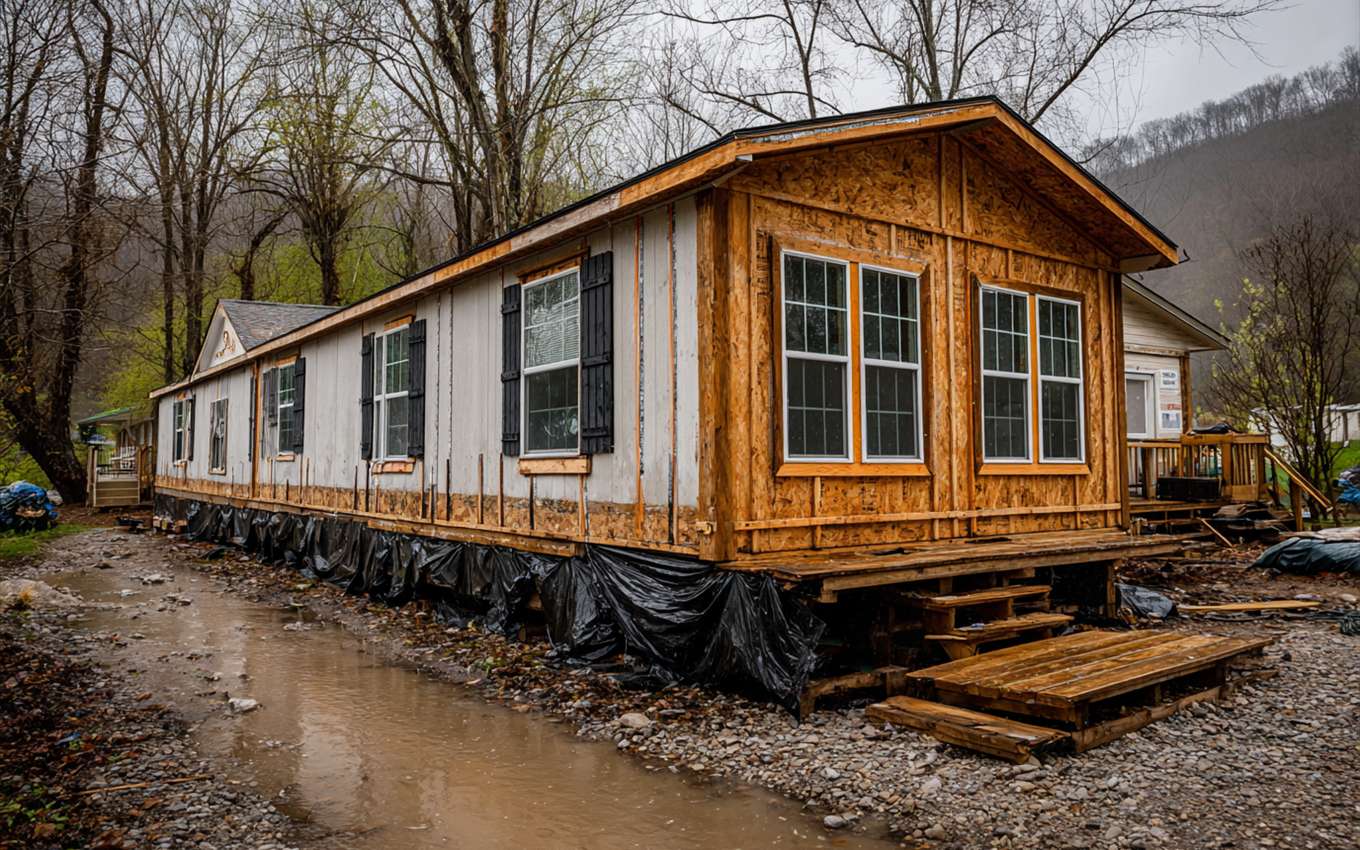
Manufactured Homes: Water Under the Floor and in the Belly Wrap
How these homes are built underneath and how they're dried.
The First Hour: What to Do Before Help Arrives
A short list for the first hour after you find water.